The Little Yogis Method™
A child-centered approach to yoga and mindfulness designed for real kids, real classrooms, and real life.
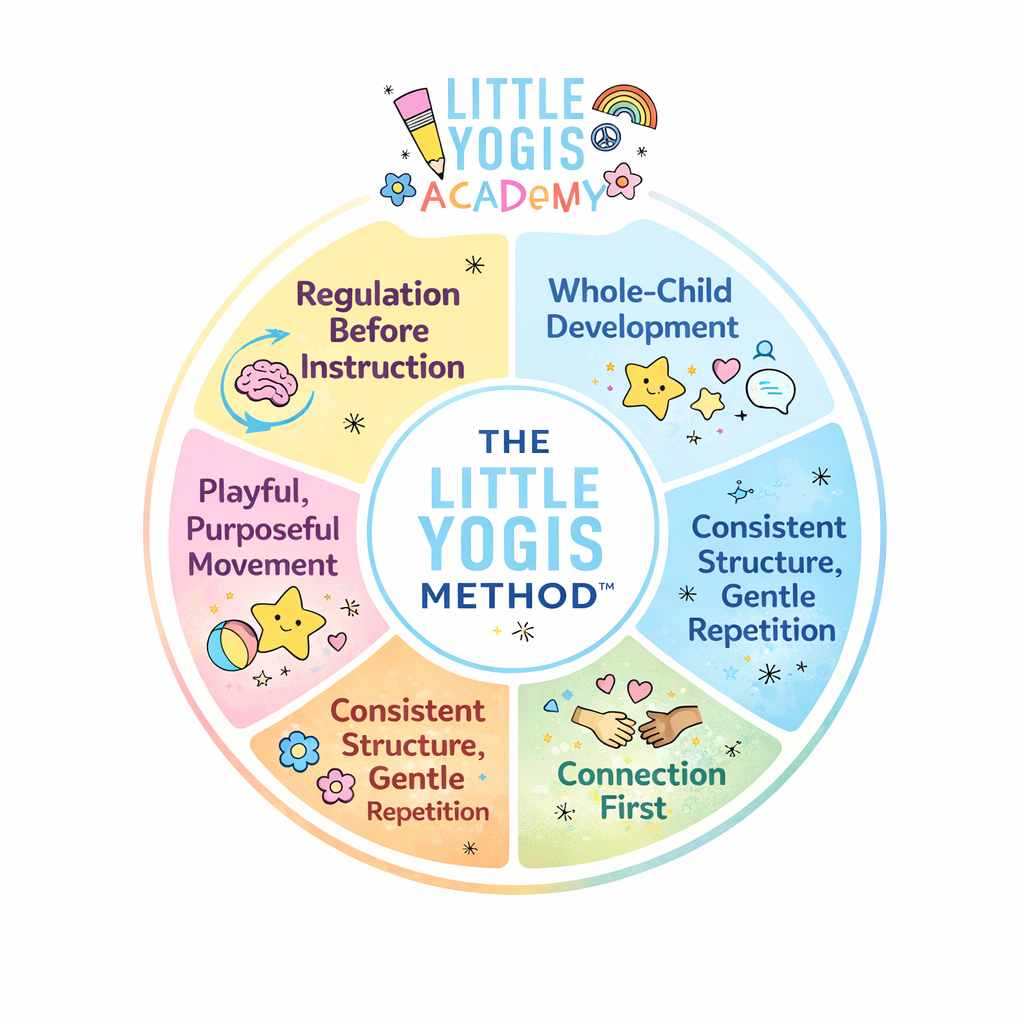
All Little Yogis Academy® classes are taught using The Little Yogis Method™, a child-centered approach to yoga and mindfulness that blends regulation, playful movement, and whole-child development in a consistent, nurturing way.
1. Regulation Before Instruction
Before asking kids to listen, follow directions, or hold poses, we help their bodies and nervous systems settle.


2. Playful, Purposeful Movement:
We use imagination, storytelling, games, props, and themes to teach yoga poses and mindful movement in a way that feels like play
3. Whole-Child Development:
Yoga becomes a tool for the whole child, not just flexibility.

4. Consistent Structure, Gentle Repetition
Classes follow a familiar flow so children know what to expect. Repetition is embraced — not rushed — allowing skills, confidence, and independence to grow over time.
5. Connection First
We prioritize connection — between teacher and child, child and caregiver, and child and self. Language is inclusive, encouraging, and empowering.
How Yoga & Mindfulness Supports Early Childhood Development
Early childhood is a critical time for brain and body development, as children build the foundations for movement, focus, and emotional regulation. Yoga supports this growth by combining playful movement, breath, and mindfulness to strengthen coordination, balance, and body awareness while also supporting calm, confidence, and self-regulation. These experiences help connect the brain and body, giving children tools they can carry into learning, relationships, and everyday life.
Breathe With Us
Watch the flowers bloom as you breathe. Tap the circle and follow the rhythm — breathe in as it expands, breathe out as it softens.
Used in Little Yogis classrooms across Canada · USA · UAE · Portugal
Get Started Teaching Kids Yoga!

Kids Yoga Teacher Trainings & Guides
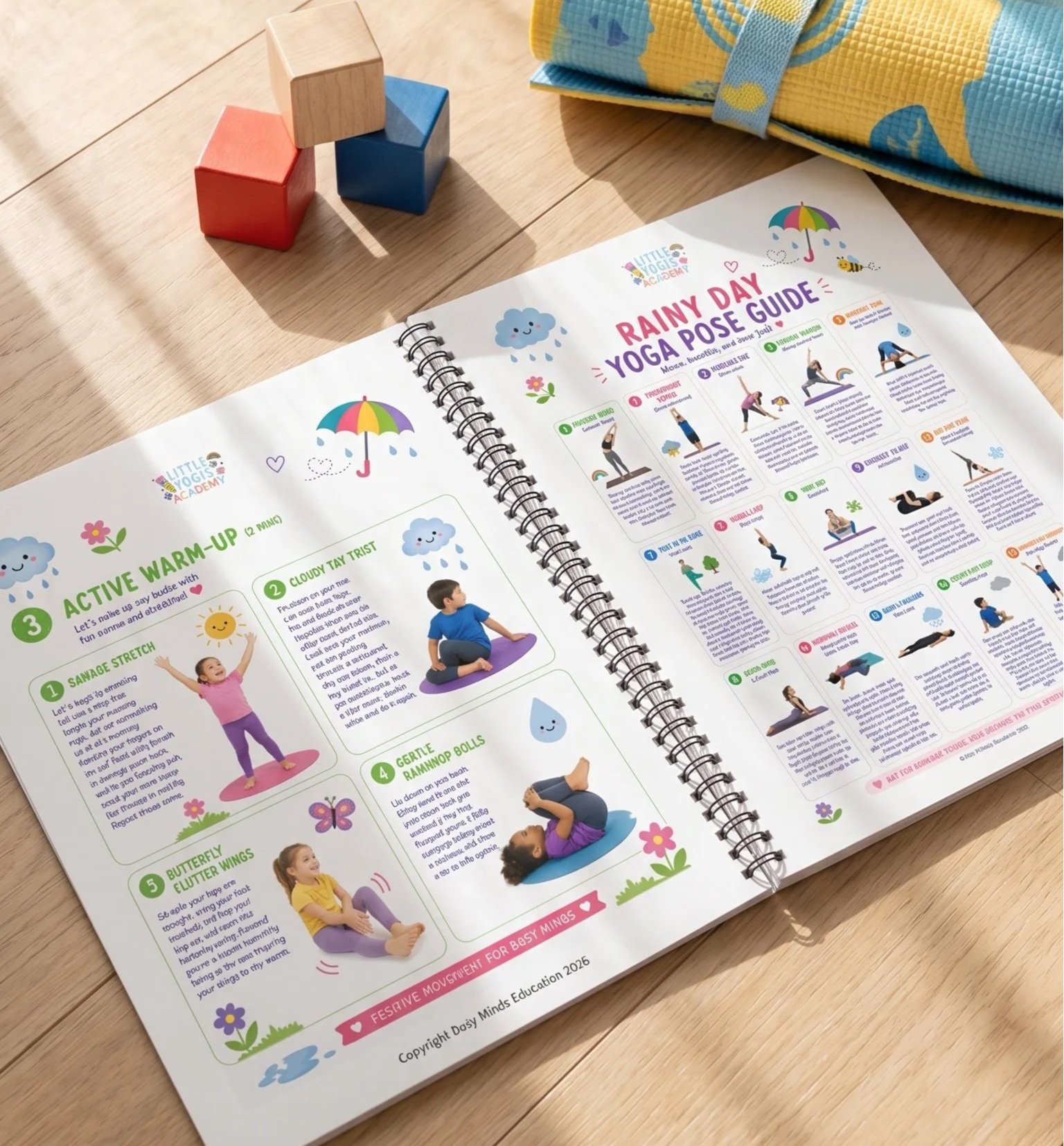

Ready-to-Teach Lesson Plans & Resources